Dubai continues to attract international buyers who want strong rental demand, modern infrastructure, and long-term investment potential. If you are researching how to buy property in Dubai as a foreigner, the process is clear but must be followed carefully. Foreigners can buy in approved communities, register ownership through the Dubai Land Department, and apply for financing if eligible.
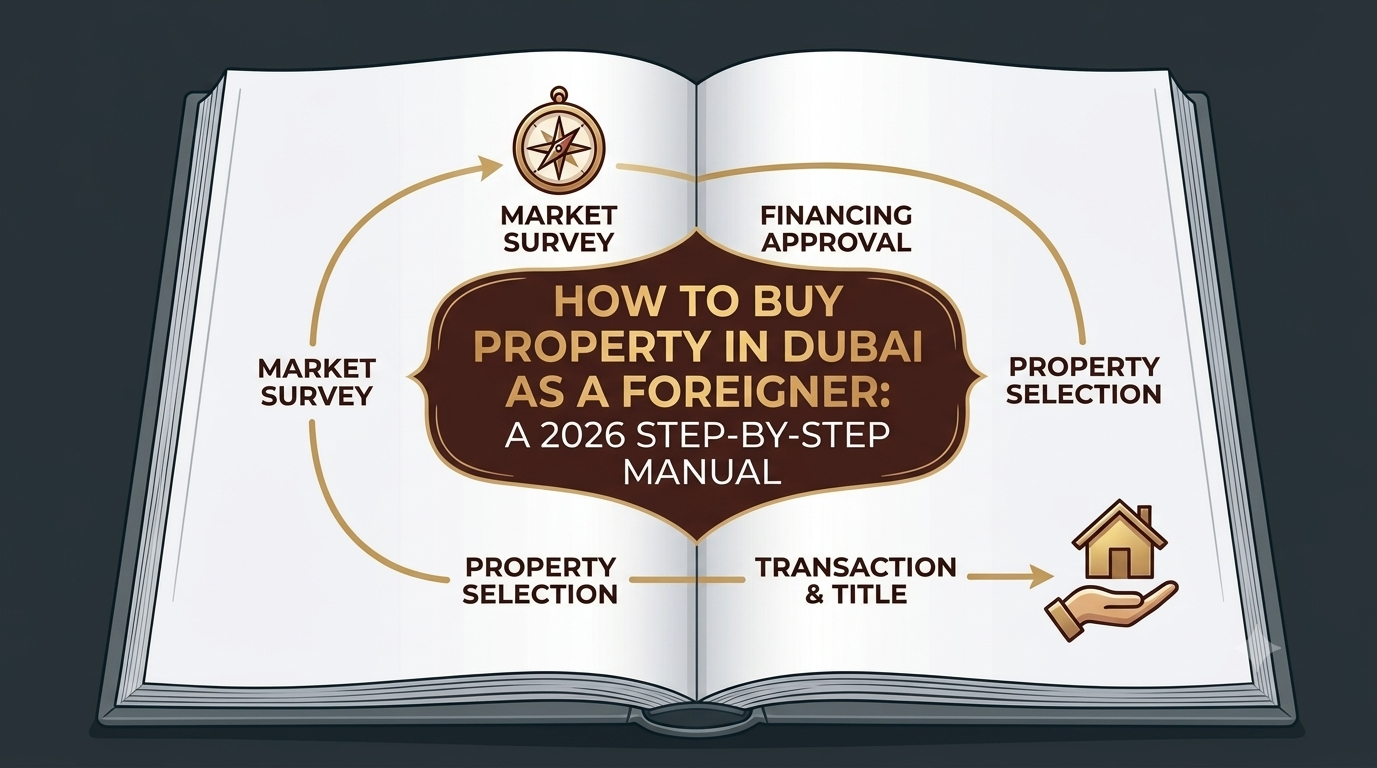
This manual explains how to buy property in Dubai as a foreigner in 2026, including ownership rules, approved locations, costs, documents, financing, and the official transfer process.
Can Foreigners Buy Property in Dubai?
Yes, foreigners can buy property in Dubai in designated freehold communities. These zones allow non-UAE nationals to buy, sell, lease, occupy, and inherit property.
Popular Dubai freehold areas include Dubai Marina, Downtown Dubai, Business Bay, Jumeirah Village Circle, Palm Jumeirah, Dubai Hills Estate, Jumeirah Lakes Towers, Dubai Creek Harbour, and Dubai South.
This is the first point to understand when learning how to buy property in Dubai as a foreigner. The property must be in an approved freehold area, and the Dubai Land Department must issue the title deed.
Step 1: Define Your Purpose
Before shortlisting properties, decide why you are buying. Your goal will shape your location, budget, property type, payment plan, and expected returns.
You may be buying for rental income, capital appreciation, personal residence, holiday use, relocation, or residency visa eligibility. Rental-focused buyers may prefer JVC, Business Bay, Dubai Marina, or Downtown Dubai. Families may prefer Dubai Hills Estate, Arabian Ranches, or The Valley. Buyers focused on future appreciation may explore Dubai South, Dubai Creek Harbour, or Palm Jebel Ali.
Defining your purpose makes the buying journey easier and prevents you from choosing a property that looks attractive but does not match your investment goal.
Step 2: Choose the Right Freehold Area
Location is one of the biggest factors in Dubai real estate because every community has different prices, tenant demand, service charges, and resale potential.
When comparing Dubai freehold areas, review prices, rental yields, connectivity, schools, malls, healthcare access, developer reputation, infrastructure, and resale demand.
Anyone studying how to buy property in Dubai as a foreigner should avoid choosing a location only because it is trending. The right area depends on your purpose, holding period, and risk comfort.
Step 3: Decide Between Ready and Off-Plan Property
Foreign buyers can purchase both ready and off-plan properties in Dubai.
A ready property is completed and can be occupied or rented immediately. It suits buyers who want faster rental returns and visible construction quality.
An off-plan property is bought before completion. It may offer flexible payment plans and lower entry prices, but buyers must check the developer’s track record, escrow account, timeline, and handover terms.
This decision matters because ready and off-plan properties carry different benefits, timelines, and risks.
Step 4: Plan Your Budget and Financing
Your budget should include more than the listed property price. Plan for government fees, agency commission, trustee fees, service charges, mortgage costs, valuation fees, maintenance, and furnishing.
Cash buyers can usually complete transactions faster. Still, how to buy property in Dubai as a foreigner often depends on whether you are paying in cash or using bank finance. Foreign buyers may apply for a mortgage or home loan UAE through local banks, subject to income, age, credit profile, liabilities, and residency status.
If you need financing, get pre-approval before making an offer. Pre-approval gives you a clearer budget, improves negotiation strength, and reduces delays.
Also compare loan tenure, interest rates, down payment rules, processing fees, and early settlement terms.
Step 5: Work With a Registered Real Estate Advisor
A registered real estate advisor can simplify the journey, especially for overseas buyers unfamiliar with Dubai communities, paperwork, and transfer procedures.
A professional advisor can compare communities, verify freehold eligibility, shortlist properties, check pricing, negotiate terms, coordinate documents, and support the transfer.
This guidance is especially useful for how to buy property in Dubai as a foreigner and makes the Dubai property buying process easier. Avoid payments without valid documentation. For off-plan properties, confirm that payments are made through authorised channels.
Step 6: Sign the Agreement
Once you choose a ready property, the buyer and seller agree on price and terms. The next step is usually signing the Memorandum of Understanding, commonly known as Form F.
Form F records buyer details, seller details, property information, price, payment terms, timeline, and sale conditions. The buyer usually pays a deposit, often 10% of the property price.
For off-plan purchases, the buyer signs a Sales and Purchase Agreement with the developer. Review the payment plan, completion date, cancellation terms, handover conditions, and service charges.
Signed agreements create payment and transfer responsibilities.
Step 7: Complete the NOC and DLD Transfer
For ready property transactions, the seller usually obtains a No Objection Certificate from the developer. This confirms there are no pending dues or objections to the transfer.
The final transfer takes place at a Dubai Land Department trustee office. The buyer, seller, broker, and bank representative, if a mortgage is involved, may need to be present or legally represented.
At this stage, the buyer pays the remaining amount, transfer fees, trustee fees, and other charges. The title deed is then issued in the buyer’s name.
Costs Foreign Buyers Should Consider
Beyond the property price, buyers should budget for Dubai Land Department (DLD) fees, trustee fees, agency commission, mortgage registration (if applicable), service charges, maintenance, and furnishing. Understanding these costs upfront helps avoid unexpected expenses.
Can Buying Property Help You Get a Dubai Visa?
Property ownership may qualify eligible investors for renewable residency or the UAE Golden Visa, subject to current government regulations and investment thresholds. Always check the latest eligibility requirements before purchasing for residency purposes.
Common Mistakes to Avoid
Avoid buying outside approved freehold areas, skipping mortgage pre-approval, ignoring service charges, overestimating rental returns, or making payments without proper documentation. Careful due diligence is essential for a secure investment.
Conclusion
Understanding how to buy property in Dubai as a foreigner starts with knowing where foreigners can buy, how ownership is registered, what documents are required, and what the full transaction will cost.
Dubai offers strong opportunities through approved freehold ownership, modern infrastructure, rental demand, tax-friendly conditions, and residency options. However, the right decision should be based on location, due diligence, financing, and long-term value.
If you are planning how to buy property in Dubai as a foreigner in 2026, Almoh Realtors can help you compare communities, shortlist suitable properties, understand documentation, and move through the Dubai property buying process with clarity and confidence.
Ready to explore your Dubai property options? Get in touch with Almoh Realtors for guidance on finding the right property and navigating the buying process with confidence.
FAQ
What is the first step in how to buy property in Dubai as a foreigner?
The first step is to define your purpose, budget, and property type. After that, shortlist approved communities and work with a registered advisor.
Can foreigners buy in all Dubai freehold areas?
Foreigners can buy in approved Dubai freehold areas, but not every property across the emirate is open to foreign ownership.
Is the Dubai property buying process difficult for non-residents?
The Dubai property buying process is structured when handled correctly. Non-residents can buy property, but they should prepare documents early and use professional support.
Can I get a home loan UAE as a foreign buyer?
Yes, foreign buyers may qualify for a home loan UAE through local banks, depending on income, residency status, credit profile, age, and bank criteria.
Is ready or off-plan property better in Dubai?
Ready property is better for immediate use or rental income. Off-plan property may suit buyers who want flexible payment plans and potential future appreciation.